


Owners are locking in their 2027 capital budgets right now, and many of those numbers started as budget pricing from GCs and subcontractors who estimated the work for free. That free work is the first of several preconstruction costs contractors routinely underestimate – and with nonresidential construction input prices up 8.9% year over year as of August 2026, the gap between what precon really costs and what you planned for it is getting wider.
If you run preconstruction for a GC or an established specialty contractor, you know the October pattern. A conceptual set lands in your inbox with half the sheets stamped “NOT FOR CONSTRUCTION,” the owner wants a number by Friday, and your estimators are already buried in hard bids. You’ll turn it around because the relationship matters. But that number will follow you into 2027, and the hours behind it rarely show up in anyone’s budget.
2027 Owner Budgets Raise the Stakes on Preconstruction Costs
Owners need defensible numbers before they can get projects approved, financed, and scheduled. That puts contractors in a familiar spot: provide budget pricing early to earn a seat at the table, or risk being left off the bid list entirely.
The 2027 market makes that trade harder. AGC’s latest data shows rising material and labor costs are making projects harder to pencil out, with some developers putting planned work on hold. Meanwhile, AGC’s chief economist notes that data center demand is keeping labor tight even while many other project types stay soft.
Put those together and you get more budget requests, more projects that stall before bid day, and lower conversion on the estimating hours you spend. Owners tracking where spending is heading often start with the U.S. Census Bureau’s construction spending data, and contractors should watch it too – it tells you which sectors are likely to keep sending budget requests that turn into real work.
Here’s the part nobody writes into the contract: owners remember the number. They forget the assumptions behind it.
What Are Preconstruction Costs?
Preconstruction costs are the expenses a contractor carries before a project starts – estimating labor, takeoffs, budget pricing, design reviews, value engineering, bid preparation, and the software and data that support that work. For most GCs and subcontractors, these costs are overhead that only gets recovered when a bid wins. Because they’re spread across dozens of pursuits, they’re among the least-tracked costs in a construction business.
Six Preconstruction Costs Contractors Underestimate Every Year
Most preconstruction budgets account for estimator salaries and software licenses. The real costs sit in the gaps between those line items.
1. Budget Pricing That Never Turns into a Bid
Conceptual estimates feel cheap because they’re “just a ballpark.” They aren’t. A credible budget number still requires a takeoff, a scope review, current pricing, and someone senior enough to stand behind it.
Run the math on your own team. As an illustration: if your estimators produce 40 budget estimates a year at 20 hours each, that’s 800 hours. If a quarter of those projects reach the bidding stage and you win a fraction of those, most of that time is unrecovered overhead. Most contractors have never put a number on it, so it never makes the 2027 budget.
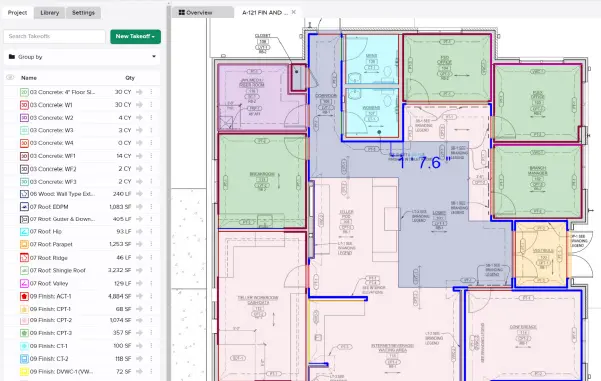
This is where first-pass measurement makes the biggest difference. STACK’s AI Takeoff reads an architectural floor plan and detects walls, rooms, doors, and windows in minutes, so your estimator starts a budget number from real quantities instead of a blank sheet. Every measurement lands in your standard takeoff tools for review – the AI does the tracing, and your estimator still decides what goes in the number.
2. Re-Estimating Every Time the Drawings Change
The budget number you gave in October is based on schematic design. By the time the project bids, you’re looking at construction documents, three addenda, and a revised scope narrative. Every revision means remeasuring, repricing, and re-checking quantities against the last version.
Teams that rebuild estimates from scratch carry this cost on every pursuit. Teams that rely on standardized assemblies and saved takeoffs can update quantities and let pricing flow through, which shrinks a two-day re-estimate into a few hours.
3. Escalation Between the Budget Number and Buyout
This is the cost that turns a good relationship into a hard conversation. The window between budget pricing and buyout can stretch six months or more, and 2026 shows how much prices can move in that time. AGC reports the producer price index for diesel jumped 77.8% from August 2025 to August 2026, while metals subject to tariffs of up to 50% also rose steeply.
Escalation doesn’t hit every trade the same way, and that’s where experienced preconstruction teams separate themselves. A structural steel or metal decking subcontractor feels tariff pressure directly in mill pricing. Electrical contractors carry copper exposure across wire, bus duct, and switchgear, with long lead times that lock in pricing late. Concrete contractors feel diesel twice – once in ready-mix delivery surcharges and again in pump and equipment costs – while site and civil contractors see it across their whole equipment fleet. A blanket 5% escalation line doesn’t reflect any of that. A better approach is to date-stamp every budget number, state a validity window, and carry escalation by material category based on current regional cost data rather than one number across the whole estimate.
4. Estimator Time You Can't Easily Replace
Estimators are some of the hardest people in a construction company to hire, and the hardest to replace without losing knowledge. AGC’s 2026 Workforce Survey found that workforce shortages remain the top reason for project delays, and federal immigration policies are affecting nearly one-third of firms.
When a senior estimator leaves, the cost isn’t just a recruiter’s fee. It’s months of slower turnaround, missed bid dates, and a new hire relearning your pricing, your subs, and your markups. If your 2027 plan assumes a fully staffed precon team all year, build in a cushion. And give the estimators you have tools that let them do more without working every Sunday.
5. Knowledge Stuck on One Laptop
If your takeoff lives on one laptop in the office, you don’t have a process. You have a single point of failure.
Historical cost data is one of the most valuable assets a preconstruction team owns, and it’s often scattered across personal spreadsheets, old email threads, and the memory of whoever priced the last similar job. Contractors who compare estimates vs. actuals consistently price the next job with more confidence. Those who don’t end up re-learning the same lessons on every bid.
6. Re-Keying Between Disconnected Tools
Takeoff in one program. Estimate in a spreadsheet. Proposal in a word processor. Job setup typed again in accounting. Every handoff is a chance to transpose a number, drop a line item, or carry an old price forward.
This cost rarely shows up as a line item because it hides inside “estimating time.” But ask your team how many hours a week they spend copying numbers between screens, and the answer is usually uncomfortable.
Newer tools are attacking this handoff problem head-on. STACK IQ connects AI assistants like Claude and ChatGPT to your STACK data, so an estimator can ask for a proposal, a schedule of values, or a job cost budget built from the same estimate – no retyping, and no drift between documents. It can also flag missing unit prices and mis-tagged items before anything goes out the door.
"STACK IQ has taken our estimating to a whole new level. It allows us to produce estimates, proposals, and budgets off one prompt. We are able to identify discrepancies in estimates and revamp our document formatting from 'similar' to identical and repeatable."
Evan Borseti, Turner Brothers
A Realistic 2027 Preconstruction Budget Starts with Last Year's Numbers
You can’t budget precon accurately if you’ve never measured it. Here’s a practical way to build the 2027 number before bid season starts:
- Count last year’s estimates by type: Separate budget pricing, hard bids, and negotiated work, and note which ones turned into awarded contracts.
- Put an hour value on each type: Even rough averages give you a cost-per-estimate figure you can plan against.
- Set a budget pricing policy: Decide which owners and project types earn free budget pricing, when to propose a paid preconstruction services agreement, and when to decline politely.
- Qualify every number you send: Date-stamp budget pricing, list your assumptions, and state a validity window so escalation doesn’t become your problem by default.
- Build reusable assemblies: Standardize your most common scopes so re-estimates and revisions take hours, not days.
- Review estimates vs. actuals every quarter: Feed what you learn back into your assemblies and pricing so each year’s budget gets sharper.
The goal isn’t to stop doing budget pricing. It’s to know what it costs so you can avoid underbidding your own overhead.
Technology Lowers Preconstruction Costs Only Where It Removes Rework
Software won’t fix a bid/no-bid policy that says yes to everything. If your team chases every request, faster tools just help you lose money more efficiently. Start with the policy, then look at where technology removes repeated work.
The biggest gains come from three places: measuring faster, reusing what you’ve already built, and moving numbers without retyping them. AI-assisted takeoff handles first-pass measurements on floor plans. Assemblies standardize your common scopes. And AI assistants connected to your estimating data can draft proposals and budgets, then flag what looks wrong – while a person reviews and signs off on every number.
Keep one principle in front of your team as AI tools show up in more estimating software: quantities are data, estimates are commitments. Technology can speed up the counting. The judgment behind a number your company signs still belongs to your people.
STACK customers have reported meaningful time savings when they move takeoff and estimating into one connected workflow – Michael Manning Roofing has cut their estimating time in half. That kind of gain is what turns budget pricing from a resource drain into a manageable cost of doing business.
STACK Keeps Precon Work in One Place So the Costs Stay Visible
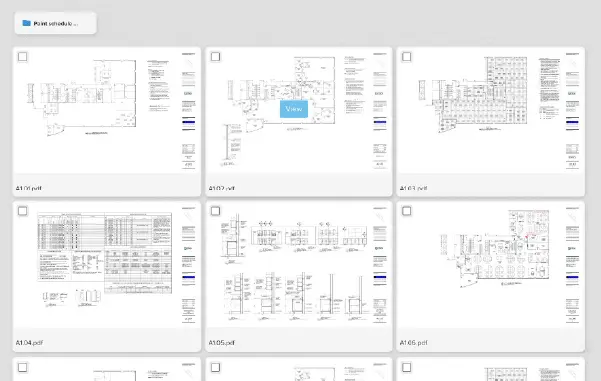
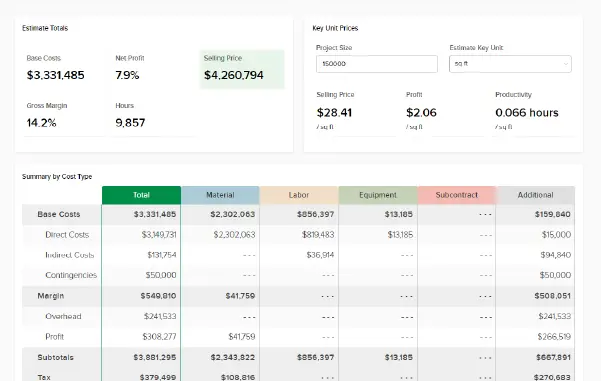
STACK Takeoff & Estimate is built for the work that eats preconstruction budgets. Your team does takeoffs from PDF plan sheets in the cloud, so a director of precon can see every active estimate across offices without asking for a file. Assemblies standardize your most common scopes. AI Takeoff generates first-pass measurements from floor plans, and Autocount handles repetitive symbol counts across a plan page. STACK IQ lets your team work with that data from the AI tools they already use, turning one estimate into proposals, SOVs, and job cost budgets.
For pricing, STACK connects to regional cost data from BNi Building News, which helps when you need current numbers for escalation-sensitive materials. When a bid wins, STACK’s integrations send estimate data to Acumatica, Sage 300 CRE, Sage Intacct, and others, so nobody retypes the job.
None of that replaces a disciplined budget pricing policy. It makes the policy easier to follow, and it keeps your historical data in a place that doesn’t walk out the door when someone changes jobs.
The Bottom Line: Budget for Precon Like the Cost Center It Is
Owners will set their 2027 budgets with or without your input, and the contractors who show up early with credible numbers will win more of that work. The difference between doing that profitably and doing it at a loss comes down to whether you know your preconstruction costs – the budget pricing that never converts, the re-estimates, the escalation risk, the estimator time, and the rework hiding between tools.
Measure last year. Set a policy. Qualify every number. Then give your team tools that let them reuse their best work instead of rebuilding it. If you want a starting point, compare your estimating speed, bid volume, and win rate against 18 real construction companies across flooring, roofing, plumbing, exteriors, and more.
Frequently Asked Questions about Preconstruction Costs
The most common preconstruction costs are estimator labor, takeoff time, budget pricing for owners, re-estimating after drawing revisions, bid preparation, and estimating software and cost data. Many contractors also carry hidden costs from re-keying data between disconnected tools. Because these costs spread across many pursuits, they’re often underestimated in annual budgets.
Start by counting last year’s estimates by type and outcome, then assign an average hour value to each. Multiply by your loaded estimating labor rate and add software, data, and turnover costs. Review the number quarterly against actual estimating activity so next year’s budget reflects real workload.
Many GCs and established subcontractors offer free budget pricing to build relationships, but larger or more complex requests are often better handled through a paid preconstruction services agreement. A clear policy helps decide which owners and projects justify free work. Either way, every budget number should be date-stamped and qualified with its assumptions.
Escalation affects any estimate where months pass between pricing and buyout, which is common when owners budget a year ahead. Materials tied to tariffs or fuel, such as steel, copper, and diesel-dependent work, carry the most risk. Contractors can reduce exposure by stating validity windows and carrying escalation by material category instead of one blanket percentage.
AI reduces preconstruction costs by cutting the repetitive work behind every estimate, like tracing walls and rooms on floor plans or retyping estimate data into proposals and budgets. AI-assisted takeoff generates first-pass measurements for an estimator to review, and AI assistants connected to estimating data can draft documents and flag missing prices before anything goes out. AI speeds up the work, but a person still owns every number that goes out the door.