





Construction estimating software has become a mission-critical system for contractors in 2026. The right platform can help estimators produce faster bids, reduce costly errors, improve collaboration, and connect preconstruction data directly to operations. The wrong system creates disconnected workflows, stale pricing, duplicate data entry, and preventable margin erosion.
Today’s contractors are no longer evaluating estimating tools based only on measurement speed. They are evaluating whether the software can support an end-to-end workflow that includes digital takeoff, estimating, proposal generation, bid management, project handoff, and field collaboration.
At STACK, we’ve seen customers across electrical, concrete, framing, roofing, drywall, and many other trades reduce manual estimating work dramatically after moving from spreadsheet or desktop workflows to cloud-based takeoff and estimating platforms. Many report improved bid turnaround time, better revision tracking, and stronger consistency between estimating and project execution.
If you are evaluating estimating platforms this year, these are the 12 construction estimating software features that matter most.
Bid Faster. Win More. Build Smarter.
Get your FREE account today to:
- Increase Team Efficiency
- Complete Estimates Faster
- Generate More Revenue
The 12 Most Important Construction Estimating Software Features in 2026
The 12 features that matter most, ranked by buying impact
Rank | Feature | Why it matters |
1 | AI-assisted digital takeoff | Reduces measurement time and improves accuracy |
2 | Pre-built and custom assemblies | Standardizes labor, materials, and markup |
3 | Regional pricing databases | Keeps estimates aligned with current market costs |
4 | Real-time collaboration | Enables multiple estimators and stakeholders to work together |
5 | Plan version control | Prevents bidding from outdated plan sheets |
6 | ERP and PM integrations | Eliminates duplicate data entry |
7 | Professional proposal generation | Improves presentation and bid professionalism |
8 | Reporting and dashboards | Helps estimators improve win rates |
9 | Reporting and cost breakdowns | Supports public, bonded, and institutional work |
10 | Mobile and field access | Connects estimating to project execution |
11 | SOC 2 Type II security | Supports enterprise and regulated projects |
12 | Free trial or free version | Allows contractors to validate workflows before purchase |
Must-have construction estimating software features
1. AI-assisted digital takeoff reduces manual measurement time
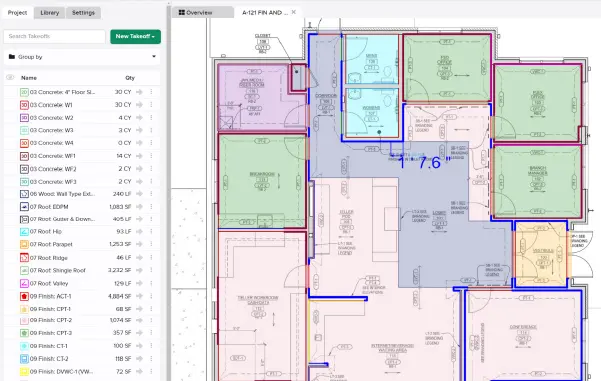
Digital takeoff is the foundation of modern estimating software. Contractors should look for platforms that support auto-count, auto-area, linear measurements, and AI-assisted quantity extraction.
Legacy estimating workflows often require estimators to manually measure conditions from printed plans or desktop PDFs. Cloud-based takeoff platforms automate much of this process and improve consistency across teams.
Modern AI-assisted takeoff tools can identify repetitive conditions such as doors, windows, fixtures, lighting, or floor areas automatically. According to STACK customer feedback, contractors using AI-assisted takeoff frequently reduce repetitive measurement work significantly on large bid packages.
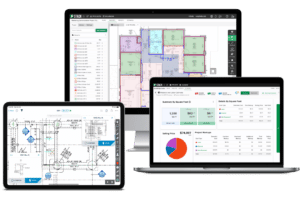
STACK’s Takeoff & Estimating platform combines digital takeoff, AI-assisted measurement workflows, and estimating in a single cloud-based environment.
Why this matters in 2026
Labor shortages continue to impact the construction industry. According to the Associated General Contractors of America, many contractors still struggle to hire experienced workers, including estimators and project personnel. Faster estimating workflows help teams handle higher bid volume without increasing headcount.
2. Assemblies create consistency across every estimate
An assembly bundles labor, material, equipment, production rates, and markup into a reusable estimating structure. Instead of rebuilding costs manually for every project, estimators can standardize pricing and workflows.
For example, a framing contractor may create assemblies for:
- Exterior wall systems
- Metal stud framing
- Interior partitions
- Sheathing packages
- Labor production assumptions
The best estimating software includes:
- Pre-built assemblies
- Custom assembly creation
- Trade-specific libraries
- Shared company-wide templates
At STACK, many specialty trade customers use shared assemblies to maintain estimating consistency across multiple estimators and branch offices.
The ability to centralize estimating logic becomes increasingly important as companies scale.
3. Regional pricing databases improve bid accuracy
Material and labor pricing vary dramatically by region. Lumber pricing, freight costs, labor burden, and subcontractor rates can differ significantly between markets.
Good estimating software supports:
- Regional cost databases
- Supplier pricing imports
- Custom labor rates
- Real-time material adjustments
- Escalation tracking
Contractors frequently use databases like BNI alongside supplier quotes to validate pricing assumptions.
Estimating software without flexible pricing management increases the risk of underbidding projects when market conditions shift quickly.
4. Real-time collaboration supports modern estimating teams
Construction estimating is increasingly collaborative. Multiple estimators, project managers, operations leaders, and executives often participate in the bidding process simultaneously.
Cloud-native estimating platforms support:
- Multi-user estimating
- Shared takeoffs
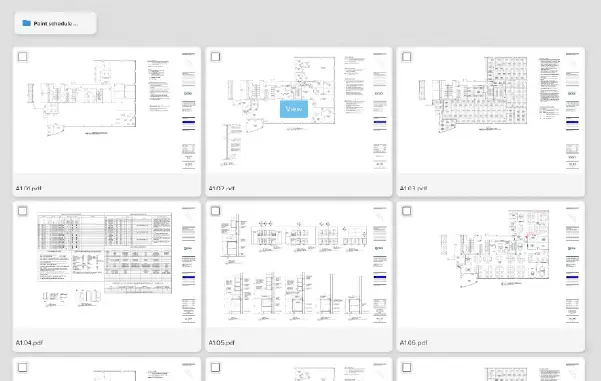
- Centralized project files
- Role-based permissions
- Live updates across teams
Desktop software creates bottlenecks because files often live on local machines or internal servers.
STACK’s cloud-based estimating workflow enables estimators and stakeholders to collaborate from anywhere with centralized project visibility.
Desktop vs. cloud estimating software
Capability | Cloud-Based Software | Desktop Software |
Multi-user collaboration | Yes | Limited |
Remote access | Yes | Often restricted |
Revision synchronization | Automatic | Manual |
Real-time updates | Yes | Limited |
IT maintenance burden | Low | High |
5. Plan version control prevents costly mistakes
Revision management is one of the most overlooked estimating risks.
Architects and engineers regularly issue revised plan sheets throughout preconstruction. Without version control, estimators may unknowingly bid outdated information.
Strong estimating software should support:
- Automatic version tracking
- Plan overlays
- Revision comparison tools
- Audit history
STACK’s plan overlay and version control capabilities help estimators quickly identify changes between plan versions and reduce rework.
For large commercial projects, revision tracking can directly impact profitability because missed changes often become unrecoverable cost exposure after award.
Integrations are now a core buying requirement
6. ERP and project management integrations eliminate duplicate entry
Estimating software should not operate in isolation.
The best construction software platforms integrate with:
- ERP systems
- Accounting software
- Project management tools
- Bid management platforms
- CRM systems
Common integrations contractors prioritize include:
- Sage
- Acumatica
- QuickBooks
- Procore
- Autodesk Construction Cloud
STACK supports integrations and API connectivity that help contractors streamline workflows between estimating, operations, and accounting systems.
Why integrations matter
Disconnected systems create:
- Duplicate data entry
- Budget inconsistencies
- Manual spreadsheet exports
- Increased administrative overhead
- Higher error rates
Integrated workflows improve visibility from bid to project closeout.
Winning more work requires more than accurate math
7. Professional proposal output improves client perception
Estimating software should help contractors create polished proposals, not just calculate quantities.
Strong proposal tools support:
- Branded formatting
- Scope inclusions and exclusions
- Alternates
- Clarifications
- Line-item breakdowns
- Proposal templates
Many contractors still build proposals manually in Word or Excel after completing estimates elsewhere. That creates inefficiency and version-control problems.
STACK customers frequently use integrated proposal workflows to move directly from estimate to client-ready proposal inside the same platform.
8. Reporting and dashboards improve estimating strategy
Estimators need visibility into:
- Win rates
- Bid volume
- Margin performance
- Bid-hit ratios
- Market sectors
- Historical performance
Analytics help contractors decide:
- Which projects to pursue
- Which customers are profitable
- Which bid types produce the best outcomes
- Where estimating assumptions need refinement
According to McKinsey research, construction firms increasingly rely on digital workflows and data visibility to improve operational performance and productivity.
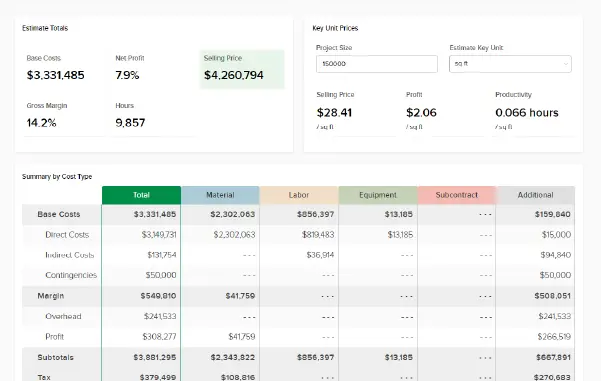
Estimating platforms with built-in dashboards and reporting help contractors make more informed bid decisions over time.
Estimating software must support operations after award
9. Reporting and cost breakdowns support compliance and transparency
Public, bonded, healthcare, and institutional projects often require detailed reporting structures.
Modern estimating software should support:
- CSI division breakdowns
- Labor vs. material reporting
- Phase reporting
- Cost code exports
- Procurement reporting
- Change order tracking
Detailed reporting is especially important for:
- Public projects
- Government work
- Healthcare construction
- Education projects
- Bonded projects
The ability to generate audit-ready documentation quickly helps contractors reduce administrative burden and improve compliance workflows.
10. Mobile and field access connects estimating to execution
The handoff between estimating and operations is one of the biggest risk points in construction.
Estimating assumptions often disappear once a project reaches the field.
Cloud-based construction platforms now allow project managers and field teams to access:
- Estimates
- Quantities
- Plan sheets
- Revisions
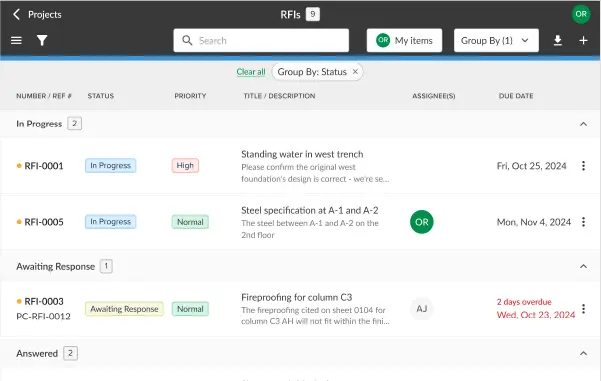
- RFIs
- Field documents
STACK’s Build & Operate platform helps connect office and field workflows through centralized project and document management.
Why this matters
Field teams can compare:
- As-bid quantities
- As-built conditions
- Labor assumptions
- Material usage
- Budget performance
That visibility improves project controls and helps contractors reduce rework.
Enterprise contractors have additional requirements
11. SOC 2 Type II security is becoming mandatory
Cybersecurity requirements continue to expand across the construction industry.
Enterprise contractors increasingly require:
- SOC 2 Type II compliance
- Role-based permissions
- Cloud security controls
- Audit logging
- Secure document sharing
This is especially important for:
- Federal projects
- Defense work
- Healthcare facilities
- Institutional construction
Cloud-native platforms generally provide stronger centralized security controls than legacy desktop systems that rely heavily on local infrastructure.
12. Free trials help contractors validate real workflows
Contractors should never purchase estimating software without testing:
- Their own plan sheets
- Their own assemblies
- Their own workflows
- Their own users
The best vendors offer:
- Free trials
- Free tiers
- Guided onboarding
- Training resources
- Real project validation
STACK offers a free account option that allows contractors to evaluate workflows before making a purchasing decision as well as extensive training and customer support upon adoption.
How to evaluate construction estimating software
Use this 5-step evaluation process before selecting a platform
- Run a real project through the software
Use actual plan sheets and compare the output against your current process.
- Measure estimating speed
Track how long takeoffs, revisions, and proposal generation require.
- Evaluate integrations
Confirm the software integrates with your ERP, accounting, and PM systems.
- Test collaboration workflows
Verify multiple users can work effectively without bottlenecks.
- Validatereporting and exports
Ensure the software supports the reporting structure your projects require.
How to evaluate construction estimating software
What are the most important construction estimating software features?
The most important features are AI-assisted digital takeoff, assemblies, version control, collaboration tools, integrations, proposal generation, and reporting. These capabilities improve estimating speed, consistency, and operational visibility.
Why is cloud-based estimating software better than desktop software?
Cloud-based estimating software supports real-time collaboration, centralized project access, automatic updates, and easier integrations. Desktop systems often create file-sharing challenges and revision-control risks.
How does AI-assisted takeoff work?
AI-assisted takeoff uses computer vision and pattern recognition to identify quantities like doors, windows, fixtures, or floor areas directly from plan sheets. This reduces manual measurement time and improves consistency.
What integrations should construction estimating software support?
Most contractors prioritize integrations with ERP systems, accounting platforms, and project management software such as Sage, Acumatica, QuickBooks, and Procore.
How can contractors evaluate estimating software accuracy?
The best approach is to run historical projects through the platform and compare estimated costs against final project outcomes. Contractors should also evaluate revision management, reporting accuracy, and workflow efficiency.