





|

Why the Best Construction Estimators Come From the Field

/

The most valuable estimators are not only fast with takeoffs, they understand how work gets built. Field experience has become the defining factor separating average estimators from high-impact contributors who consistently deliver accurate, profitable bids. 

As labor shortages tighten and project complexity increases, contractors are realizing that estimating isn’t just about counting quantities—it’s about interpreting reality. And that perspective is often forged in the field, not behind a desk. 

Field Experience Turns Estimating Into a Strategic Advantage

The strongest estimators don’t just read plan sheets. They can visualize the full jobsite. They understand sequencing, labor challenges, and the real-world constraints that impact productivity. 

Field experience gives estimators the ability to: 

Without that context, estimating becomes theoretical. With it, estimating becomes strategic. 

What Is Construction Estimating?

Construction estimating is the process of calculating the total cost of a project, including materials, labor, equipment, and overhead. It requires analyzing plan sheets, specifications, and project requirements to produce an accurate bid. 

Modern estimating goes beyond quantity takeoff, involving risk assessment, constructability review, and strategic pricing decisions. 

Why Field Experience Improves Estimating Accuracy

Estimating accuracy hinges on understanding how work actually gets performednot just how it appears on paper. 

1. Realistic Labor Productivity Assumptions

Labor is one of the most variable and expensive components of any estimate. Estimators with field experience understand: 

Crew efficiency under different conditions

For example, a concrete crew pouring slabs in ideal spring weather will perform very differently than one working in extreme heat or freezing conditions. High temperatures can accelerate curing and force crews to work faster under pressure, while cold weather may require blankets, heaters, and slower placement—reducing overall productivity.  

How site constraints impact productivity 

A drywall crew working in a wide-open new build can move quickly, but that same crew in a tight renovation space—navigating occupied areas, limited staging, or restricted working hours—will see significant slowdowns.  

The difference between ideal vs actual output 

Standard labor units might assume uninterrupted workdays, but real jobs include delays from inspections, material deliveries, or coordination pauses. 

A purely office-based estimator might rely on standardized rates, but field-experienced estimators know when—and why—those rates don’t apply. 

2. Better Understanding of Constructability

Not everything that’s drawn is easy—or even feasible—to build. Field-experienced estimators can: 

Identify sequencing conflicts 

If mechanical, electrical, and plumbing trades are all scheduled to work in the same ceiling space at the same time, congestion can slow progress or require rework. An experienced estimator will recognize this and adjust labor or flag the issue before bidding.  

Recognize access limitations 

Installing large equipment like rooftop units may look straightforward on plans, but limited crane access, tight urban sites, or restricted laydown areas can significantly increase time and cost.  

Flag coordination issues across trades 

A common issue occurs when structural steel, ductwork, and fire protection systems compete for the same space. Without proper coordination, crews may need to modify installations in the field—adding labor hours that weren’t originally accounted for.  

This reduces the risk of underestimating complexity, which often leads to budget overruns.  

3. Stronger Scope Coverage

Missed scope is one of the most common causes of profit loss in construction. Estimators with field backgrounds are more likely to catch: 

Temporary work requirements

A concrete project may require temporary shoring or formwork that isn’t clearly detailed in the drawings but is necessary to safely complete the work.  

Material waste factors

An estimator with roofing experience knows that cuts, overlaps, and field conditions can significantly increase material usage beyond plan quantities—especially on complex roof geometries.  

Installation nuances not clearly documented

In drywall, plans may specify wall types but not account for corner beads, backing, or additional finishing levels in high-visibility areas. These small details add up quickly in both labor and material costs.  

Quotes

My experience in glazing, site supervision, project management, and GC-side estimating taught me that accuracy comes from understanding how work is actually executed. Estimating is not about assuming that ten laborers will all be productive on the same activity; it is about knowing who is truly needed, when they are needed, and how resources can be planned across the site. Field experience helps reduce unnecessary material deliveries, duplicated work, oversized contingencies, and unknown assumptions. In glazing, even 5mm can decide whether a window fits or fails, so accurate estimating starts with coordination, verification, and asking the right questions before the work reaches the site. That is how field experience turns a ‘guesstimate’ into an ‘accurestimate’.

/

Meena Hamati, Ing. (Eng), MEng, PQS

STACK Industry Consultant

Meena began his career as a Site Engineer and Quantity Surveyor with general contractors in Abu Dhabi and Dubai before continuing his career in Canada with specialized trade contractors. He holds the Professional Quantity Surveyor designation through the Canadian Institute of Quantity Surveyors (CIQS) and is a licensed Professional Engineer and member of the Ordre des ingénieurs du Québec (OIQ). With more than 10 years of experience in construction management, cost estimation, budget planning, and technical analysis, Meena brings his industry experience to STACK, along with specialized knowledge in building envelope systems and steel structures.

The Gap Between Theoretical and Real-World Estimating

One of the biggest risks in today’s estimator shortage is relying on professionals who have strong technical skills but limited field exposure. 

Here’s how that gap shows up: 

Skill Area
Office-Only Estimator
Field-Experienced Estimator
Labor Estimates
Based on standards
Adjusted for real conditions
Constructability
Assumed
Evaluated
Risk Awareness
Reactive
Proactive
Bid Accuracy
Inconsistent
Reliable

Why Trade-Specific Knowledge Amplifies Field Experience

Field experience alone is powerful—but when combined with trade-specific expertise, it becomes a major competitive advantage. 

Each trade has unique: 
  • Installation methods 
  • Labor drivers 
  • Material considerations 
  • Risk factors 
For example: 
  • Electrical estimators must account for complex routing and code requirements 
  • Concrete estimators must understand forming, curing, and weather impacts 
  • Drywall estimators must factor in sequencing and finishing levels 

Estimators who specialize in a trade can build more precise assemblies, apply more accurate labor units, and produce bids that reflect real execution. 

Quotes

When I started my estimating role straight out of college, I assumed the job would be what you'd expect: learning the company's estimating methodology, running practice takeoffs, and comparing my numbers against completed projects. What I didn't anticipate was spending my first two months in the field, rotating through every crew the company had.

I worked alongside the E&S and clearing crews, dirt crews, pipe crews installing wet and dry utilities, concrete crews, stone and paving crews, and finally the punch crews closing out projects. It gave me a perspective that most estimators never get. A firsthand look at how a job actually gets built once the plans hit the dirt.

That experience reshaped how I approached every bid afterward. When I came across a tricky sanitary connection 30 feet deep next to an existing roadway, or a con/span bridge placement over a protected wetland, I wasn't just pricing line items on a sheet. I could picture the crew, the equipment, the sequencing, and the headaches, and I could bid the work accordingly.

Those same lessons were carried directly into my project management role. The details I'd learned in the field as a new hire became the exact issues I could flag during precon handoffs and milestone cost reviews. These were the kind of things that quietly blow schedules and budgets when nobody catches them early.

/

Garrett Hume

STACK Senior Industry Consultant

Garrett began his career as an estimator for a large heavy civil construction company in Northern Virginia, later advancing to project manager. He then transitioned to the federal government, managing complex contracts and programs. Garrett brings a strong background in project delivery, cost analysis, and operational efficiency across both public and private sectors.

The Cost of Inexperienced Estimating

When estimators lack field experience, the consequences show up quickly—and expensively. 

Common outcomes include:
  • Underbidding  Eroded margins and project losses  
  • Overbidding  Missed opportunities in competitive markets 
  • Scope gaps  Change orders and strained client relationships 
  • Poor project handoffs  Misalignment between estimating and operations

According to industry research from the Associated General Contractors of America, workforce shortages are already impacting project timelines and costs—making accurate estimating more critical than ever. 

How Contractors Can Develop Field-Savvy Estimators

The estimator shortage isn’t going away overnight. But contractors can take practical steps to build stronger estimating teams. 

1. Create Regular Collaboration Between Field & Estimating Teams

Foremen and superintendents bring critical real-world insight. Contractors benefit from regular collaboration. 

  • Pre-bid check-ins to validate assumptions and sequencing  
  • Post-job reviews to compare estimated vs actual performance  
  • Occasional jobsite visits to build real-world context  

Even small touchpoints help estimators stay grounded in how work actually gets built—without disrupting field operations. 

2. Invest in Trade-Specific Training and Certifications

Organizations like the American Society of Professional Estimators (ASPE) offer certification programs and continuing education that help estimators build both technical and trade-specific expertise. These programs reinforce best practices in cost analysis, risk evaluation, and ethical estimating standards. AACE International further support advanced cost engineering and estimating practices, particularly for complex and large-scale projects. Certifications like this are increasingly being used by contractors as a benchmark for estimator competency. 

3. Pair Junior Estimators With Experienced Mentors

Mentorship accelerates learning and helps bridge the gap between theory and practice. Implement these programs pairing experienced employees with newcomers facilitates knowledge transfer and professional growth.

4. Standardize Assemblies and Historical Data

Using consistent cost structures improves accuracy, but the real value comes from building a reliable data foundation over time. 

Standardized assemblies allow estimators to apply proven labor, material, and production rates across projects, rather than starting from scratch on every bid. When these assemblies are tied to historical job data, they become even more powerful, reflecting how work actually performed, not just how it was planned. 

Quotes

Starting in the field and wearing a lot of hats before settling into estimating gave me a real appreciation for the balance this role requires. Field experience helps you understand how the work comes together, so you can catch the small misses that turn into real cost, especially around labor, sequencing, access, and coordination. At the same time, it teaches you what truly needs to be captured in the estimate and what can realistically be worked through in the field. Estimating is not just plans and numbers, it is applying experience, project data, and judgment to the current situation. Every project is different, but the experience you bring from the field helps you ask better questions and build a stronger estimate.

/

Iris Valle

STACK Industry Consultant II

Iris built her career as a construction estimator in NYC, delivering detailed pricing and scope analysis for general contractors across a wide range of project types. She now brings an experienced estimator’s perspective to STACK, equipping preconstruction teams to work more efficiently and confidently from takeoff through proposal.

How Technology Bridges the Experience Gap

While field experience is critical, technology can help scale its impact across teams. 

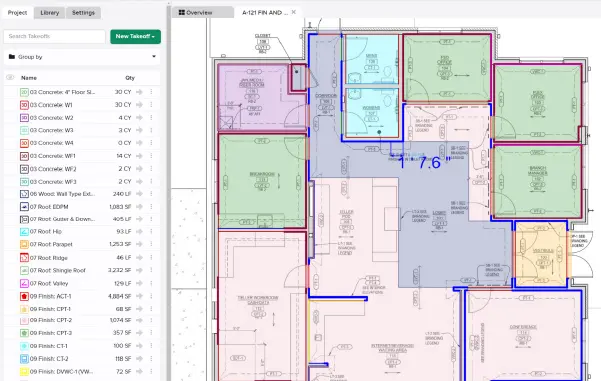
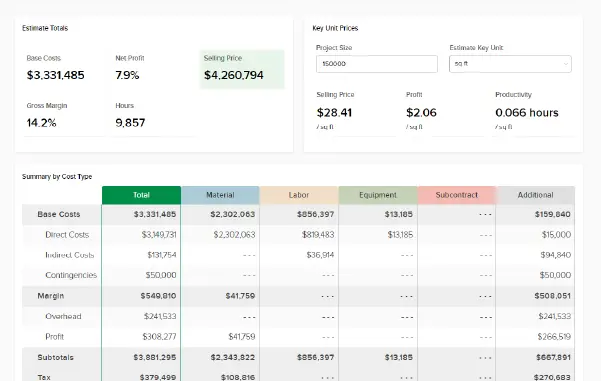
STACK Takeoff & Estimating enables estimators to: 

This allows less-experienced estimators to work more efficiently—while enabling experienced estimators to focus on higher-value decisions. 

Additionally, STACK Build & Operate connects field and office teams, ensuring that insights from the jobsite inform future estimates.  Technology doesn’t replace field knowledge, but it makes that knowledge more accessible and scalable

Compliance and Risk: Why Field Insight Matters

Construction projects must meet strict regulatory requirements, from OSHA safety standards to local building codes. 

Estimators with field experience are better equipped to: 
  • Account for safety-related costs 
  • Understand inspection requirements 
  • Anticipate compliance-driven scope 

Digital platforms with audit trails—like STACK—help document assumptions, track revisions, and support compliance efforts throughout the project lifecycle. 

Experience Turns Estimates Into Strategy

Field experience transforms estimating from a mechanical task into a strategic advantage. It enables estimators to see beyond the drawings, anticipate challenges, and deliver bids that hold up in the real world. 

Contractors who invest in developing field-savvy estimators will be better positioned to win work, protect profitability, and deliver successful projects. 

FAQ

A construction estimator calculates the total cost of a project, including materials, labor, and overhead. They analyze plan sheets and specifications to produce accurate and competitive bids. 

Field experience helps estimators understand how work is actually performed, leading to more accurate labor assumptions, better scope coverage, and improved constructability analysis. 

It’s possible, but more challenging. Estimators without field experience may rely heavily on standard data, which can lead to inaccuracies if real-world conditions differ. 

Estimators can gain exposure by visiting jobsites, collaborating with field teams, or transitioning from field roles into estimating positions. 

Modern estimators use digital takeoff and estimating platforms like STACK, which offer AI-assisted measurements, assemblies, and cloud-based collaboration. 

Share

Stay informed with the STACK Newsletter.

Learn tips & best practices to quickly grow your construction business.

Recent Post

BLOG_26_BestEstimators_Small
Articles

Why the Best Construction Estimators Come From the Field

Why field experience makes construction estimators more accurate, valuable, and competitive in today’s tight labor market.

Every Day is Demo Day

The best way to see how STACK solutions can help your business is to see them in action.

Shopping Basket

Which solution are you looking for?

Takeoff & Estimate
Calculate everything you need anytime, anywhere.
Build & Operate
Seamlessly link your data from the office to the field.

Need a more custom solution?  Talk to us

STACK Training Videos

Select which training library you would like to access: