







Why Your Estimate Shouldn't Stop Working After the Bid Is Won

- Your estimate should become your project budget. Rebuilding budgets after award wastes time, introduces errors, and breaks the connection between preconstruction and operations.
- Disconnected systems reduce profitability. Manual data entry, inconsistent cost codes, and duplicate work make it harder to track job costs and protect margins.
- A connected workflow creates a single source of truth. When estimating, project management, and accounting share the same data, teams collaborate more effectively and make better decisions.
- ERP integration improves visibility from bid to closeout. Carrying estimate data into project execution enables more accurate forecasting, better job cost tracking, and faster identification of potential issues before they impact profitability.
For most contractors, estimating is one of the most important business processes. Teams spend countless hours building detailed estimates, evaluating labor requirements, forecasting material costs, and refining project assumptions to submit competitive bids. But once the project is awarded, something surprising often happens.The estimate, the very document that determined the project’s expected profitability, is frequently left behind.
Project managers create new budgets. Accounting builds separate cost structures. Operations teams manually recreate information in spreadsheets or project management software. The result is duplicate effort, inconsistent data, and a growing gap between what was estimated and what is happening in the field.
The most profitable contractors understand that estimating doesn’t end when the bid is won. Instead, they use estimating data as the foundation for the entire project lifecycle.
The Project Handoff Problem
Construction estimating automation is the use of digital tools to streamline takeoffs, material calculations, and proposal generation with minimal manual input. By standardizing workflows and integrating estimating data, contractors can reduce errors, accelerate bid turnaround, and increase output without expanding their team.
What Challenges Do High-Volume Contractors Face in Estimating?
Winning work is exciting, but the transition from preconstruction to operations is where many contractors unknowingly introduce risk. When estimating systems operate independently from project management and accounting systems, information often has to be manually transferred between departments.
During this process:
- Cost codes may be recreated differently
- Budget may be adjusted without visibility
- Labor assumptions may be lost
- Material quantities may be re-entered
- Project teams may operate from different versions of the truth
Even small discrepancies can create major challenges once construction begins. As projects become more complex and margins become tighter, these disconnects make it increasingly difficult to understand whether a project is performing as expected.
The Cost of Duplicate Data Entry
One of the most obvious consequences of disconnected systems is duplicate data entry. After award, many contractors spend hours rebuilding information that already exists within the estimate. Project budgets, cost codes, labor allocations, and procurement plans are often manually recreated in project management or ERP systems.
This Process Creates Three Major Problems:
Increased Administrative Time
Project managers and accounting teams spend valuable time entering data rather than managing projects and analyzing performance.
Greater Risk of Errors
Every manual entry creates an opportunity for mistakes. A missing cost code, incorrect budget amount, or transposed number can impact reporting and forecasting throughout the life of the project.
Delayed Project Visibility
The longer it takes to establish project budgets and operational structures, the longer leadership must wait for accurate performance reporting. When estimating data flows directly into operational systems, contractors eliminate these inefficiencies and allow teams to focus on execution rather than administration.
Turning Estimates into Project Budgets:
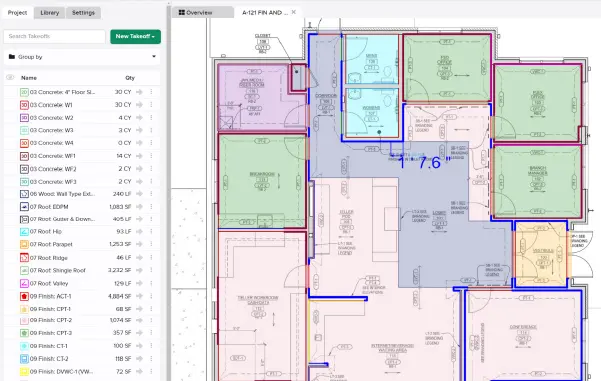
A detailed estimate contains valuable information beyond simply winning work.
It includes:
- Labor assumptions
- Material quantities
- Equipment costs
- Subcontractor budgets
- Production expectations
- Cost code structures
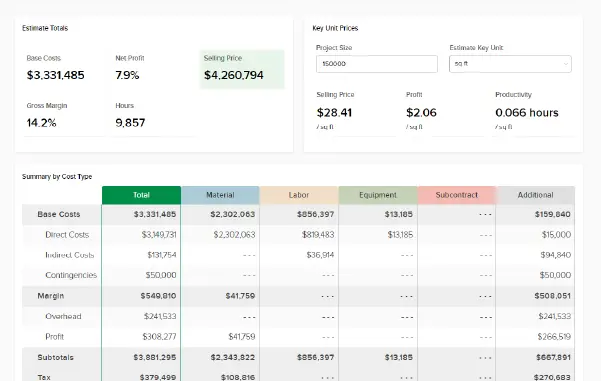
When this information transfers directly into project budgets, contractors gain a significant advantage. Instead of rebuilding budgets from scratch, project teams can begin with the exact assumptions that were used to secure the project. This creates alignment between estimating, operations, and accounting from day one. The result is faster project startup, better accountability, and more accurate performance tracking.
Improving Job Cost Visibility
One of the biggest challenges contractors face is understanding how actual performance compares to the original estimate. Without a direct connection between estimating and accounting systems, it becomes difficult to answer questions such as:
- Are labor hours tracking to estimate?
- Are material costs exceeding assumptions?
- Which cost codes are outperforming expectations?
- Where are margin leaks occurring?
When estimate data becomes the baseline for project execution, teams can compare actual costs against original assumptions in real time.
This visibility allows project managers to identify issues earlier, make informed decisions faster, and take corrective action before profitability is impacted.
Creating a Single Source of Truth
Disconnected systems often create competing versions of project information. Estimators have one set of numbers. Project managers have another. Accounting may have a third. Leadership is left trying to determine which version is correct.
A connected workflow eliminates this confusion by establishing a single source of truth from bid through project closeout.
When estimating, project management, and accounting operate from the same data foundation:
- Teams collaborate more effectively
- Reporting becomes more accurate
- Forecasting improves
- Accountability increases
- Executive decision-making becomes easier
Most importantly, everyone is working toward the same financial objectives.
How ERP Systems Preserve Estimate Intelligence
Modern ERP platforms play a critical role in connecting estimating with operations. Rather than treating estimates as standalone documents, integrated ERP systems allow contractors to preserve the intelligence built during preconstruction and carry it forward into project execution.
With the right technology foundation, contractors can:
- Convert estimates into project budgets
- Maintain cost code consistency
- Track actual performance against estimated values
- Improve forecasting accuracy
- Reduce manual processes
- Increase visibility across the organization
This creates a continuous flow of information from estimating to project management, accounting, procurement, payroll, and executive reporting. Instead of losing valuable estimating data at project handoff, contractors can leverage it throughout the entire lifecycle of the project.
Final Thoughts
Estimating is much more than a bid-winning exercise. It is the financial blueprint for project success.
When contractors disconnect estimating from operations, they create unnecessary work, reduce visibility, and increase the likelihood of costly mistakes. More importantly, they lose access to the valuable intelligence that was developed during the estimating process.
The most successful contractors are moving toward connected workflows where estimate data flows seamlessly into project management and accounting systems. By creating a single source of truth from bid to closeout, they gain greater control over costs, improve forecasting accuracy, and ultimately protect profitability.
The estimate shouldn’t stop working when the project starts. It should become the foundation for every decision that follows.
Ready to Connect Your Estimating and Operations?
If your team is still recreating budgets, re-entering cost codes, or relying on spreadsheets to bridge the gap between estimating and project execution, it may be time to rethink your technology strategy. At Strategies Group, we help construction companies create connected workflows that eliminate duplicate data entry, improve job cost visibility, and turn estimating into the foundation for project success. Whether you’re evaluating new ERP solutions, looking to better integrate your estimating platform, or optimizing your existing systems, our team can help you build a more efficient, profitable operation.
Schedule a complimentary Construction Technology Assessment with Strategies Group to discover where disconnected processes may be costing your business and how a connected technology ecosystem can help you work smarter from bid to closeout.