






In today’s competitive construction industry, estimating software for general contractors has become an indispensable tool for improving accuracy, efficiency, and profitability. Manual estimating processes—often reliant on spreadsheets or disconnected systems—leave room for error, miscommunication, and costly overruns. In contrast, digital estimating tools allow contractors to make data-driven decisions, forecast costs and schedules, and streamline workflows across the entire project lifecycle.
By leveraging construction estimating software, contractors can minimize guesswork, improve collaboration, and maintain tighter control over budgets and timelines. From cost calculations to bid preparation, these tools empower teams to focus on delivering high-quality results without being bogged down by administrative complexity.
This article explores the key ways general contractors use estimating software and the significant benefits each application provides—from managing materials and labor costs to forecasting project timelines, improving bid accuracy, tracking change orders, and scaling operations efficiently.
Key Takeaways
Before diving into the details, here’s a quick summary of what you’ll learn about the use and benefits of estimating software for general contractors:
- Improved accuracy in cost calculations and bid preparation through automation and centralized data.
- Better control of material and labor costs, reducing waste and ensuring resource efficiency.
- Enhanced forecasting capabilities that help contractors meet deadlines and avoid overruns.
- Streamlined collaboration through real-time data sharing and cloud-based updates.
- Easier management of change orders to maintain profitability and client satisfaction.
- Data-driven insights into project profitability, supporting better business decisions.
- Scalable systems that grow with the business, supporting multiple projects simultaneously.
- Time savings through automation of repetitive administrative tasks.
Integration with other tools, offering connectivity for takeoffs, cost analysis, and project management.
Managing Material Costs
One of the most essential features of estimating software for general contractors is the ability to manage material costs accurately. Construction projects depend heavily on materials—concrete, steel, lumber, finishes, and more—and even small miscalculations can significantly affect overall profitability.
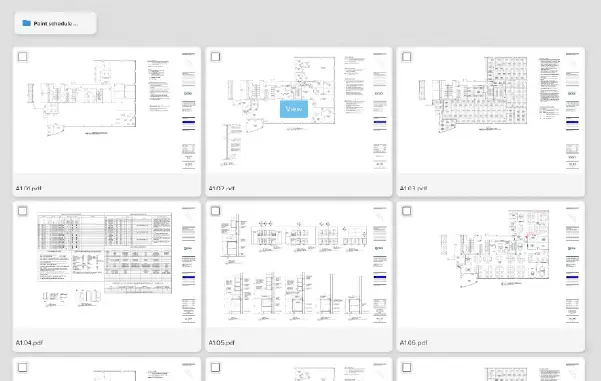
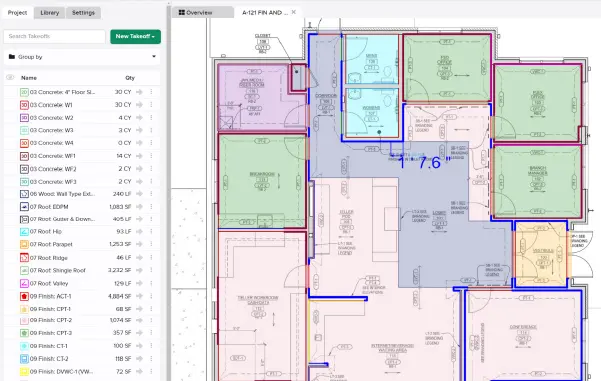
Estimating software allows contractors to perform quantity takeoffs quickly and precisely, converting digital plans into detailed lists of required materials. This feature reduces human error and ensures that every component is accounted for. By integrating with cost databases, the software provides material prices, giving estimators access to current market rates and allowing them to forecast expenses more accurately.
Efficient cost calculation also supports smarter procurement. By planning materials in advance and coordinating purchases based on project timelines, contractors can minimize waste, avoid shortages, and ensure materials are available on-site when needed—all of which contribute to a more streamlined and profitable operation.
Labor Cost Estimation
Labor is one of the largest and most variable expenses on any construction project. Estimating software helps contractors calculate labor costs with precision by breaking them down per trade, crew, or task.
Instead of relying on outdated averages or guesswork, contractors can use historical data references and benchmarking to inform new estimates. This approach leverages past performance metrics—like hours per task or production rates—to develop more realistic labor budgets.
The ability to adjust labor costs dynamically is another major advantage. If a project scope changes or unexpected conditions arise, contractors can update labor assumptions instantly and see how those changes affect the overall estimate.
By accurately estimating labor costs from the outset, contractors can maintain project profitability, avoid underestimating manpower needs, and allocate resources more effectively. Moreover, accurate labor forecasting helps with workforce scheduling—ensuring that the right number of workers are available at the right time, improving productivity, and minimizing costly idle time.
Improving Bid Accuracy
Bid accuracy can make or break a contractor’s reputation and profitability. Submitting a bid that’s too low risks financial loss, while one that’s too high may lose the job altogether. Estimating software simplifies bid preparation by automating calculations, consolidating data, and ensuring all variables are accounted for.
Through automation, the software reduces human error and provides consistent, repeatable results. Each bid draws on the same structured cost database, ensuring that every project starts from reliable, up-to-date information. Contractors can also compare multiple versions of a bid to see how changes in materials, labor, or timelines affect total cost and margin.
Because the software maintains a record of historical bids, it allows estimators to benchmark new proposals against past projects. This historical data reference helps identify patterns, refine pricing strategies, and improve competitiveness over time.
Accurate bids don’t just improve win rates—they also enhance client trust. Clients view contractors who use professional estimating tools as more transparent and reliable, giving them confidence that the bid reflects the true cost and scope of work.
Enhancing Collaboration
Construction projects often involve multiple stakeholders—owners, architects, engineers, subcontractors, and suppliers—all working from different locations. Modern estimating software enhances real-time collaboration, enabling teams to access, update, and review project data simultaneously.
Cloud-based systems ensure that everyone is working from the latest version of an estimate, eliminating confusion over outdated spreadsheets or conflicting data. Team members can leave comments, attach documentation, or make notes directly in the platform, reducing the need for endless email chains or version control issues.
Collaboration tools also improve internal workflows. Estimators can share updates instantly with project managers, who can in turn adjust schedules or budgets accordingly. Finance teams can access detailed cost reports, while executives can review reporting and dashboards to evaluate performance across multiple projects.
By centralizing communication and information, estimating software keeps everyone aligned, minimizes misunderstandings, and ultimately helps teams deliver projects more efficiently and cohesively.
Tracking Change Orders
Change orders are an inevitable part of construction, whether due to design adjustments, unforeseen site conditions, or client requests. Without proper tracking, these modifications can disrupt budgets, schedules, and profitability. Estimating software provides a streamlined solution for managing change orders efficiently and transparently.
When a change occurs, contractors can quickly update the estimate to reflect new costs, quantities, and timelines. The system recalculates totals automatically, ensuring that the financial implications are immediately visible. This feature also maintains a clear record of all approved changes, complete with timestamps and documentation, which reduces the likelihood of disputes.
By integrating change order management directly into the estimating process, contractors can ensure that every modification is accounted for and billed appropriately. This transparency maintains client trust, helps prevent revenue leakage, and ensures the project remains financially viable even when changes arise midstream.
Analyzing Project Profitability
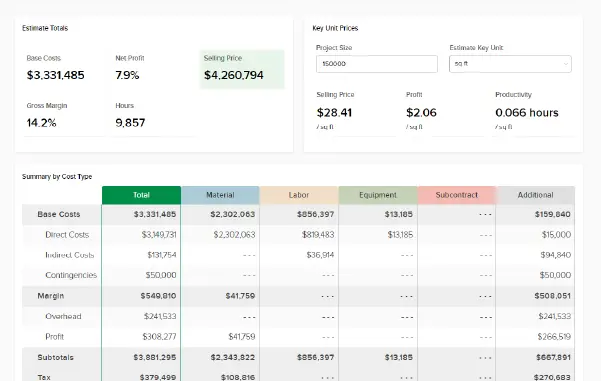
Another powerful way contractors use estimating software is to assess and improve project profitability. Before committing to a new project, estimators can use the software to run detailed financial analyses—comparing costs, potential risks, and profit margins.
Using integrated reporting and dashboards, contractors gain real-time visibility into performance indicators like cost-to-complete ratios, budget variance, and return on investment. They can also compare current estimates to historical data benchmarks, identifying which project types or clients consistently yield the highest margins.
This data-driven approach helps contractors make smarter business decisions—such as prioritizing high-value projects, adjusting bid strategies, or negotiating better supplier terms. It also enables continuous improvement, as each project contributes new data that refines future estimates and boosts long-term profitability.
In short, estimating software transforms raw project data into actionable business intelligence, empowering contractors to not only win more work but also ensure every job contributes positively to the bottom line.
Scaling Their Business
As contracting companies grow, managing multiple projects simultaneously becomes increasingly complex. Estimating software provides the scalability needed to handle higher volumes of work without sacrificing quality or control.
By consolidating cost data, resource planning, and scheduling within one system, contractors can replicate proven estimating templates across new projects. This repeatability saves time and ensures consistency, even as teams expand or new estimators come on board.
Scalable construction estimating software also supports integration with other business tools—like project management, accounting, and CRM platforms—creating a seamless workflow from bid to build. This connected environment minimizes manual data entry and enhances visibility across departments.
Ultimately, the ability to scale efficiently allows contractors to focus more on strategic growth initiatives—pursuing larger contracts, expanding into new markets, or investing in innovation—rather than getting bogged down in administrative tasks.
Freeing Up Their Time
For many contractors, time is their most valuable resource. Estimating software dramatically reduces the hours spent on repetitive tasks, freeing teams to focus on higher-value activities.
Tasks such as manual quantity takeoffs, spreadsheet calculations, and data entry are replaced by automation. Digital tools can process complex plans, generate reports, and update estimates in a fraction of the time it would take manually.
This efficiency not only increases productivity but also contributes to better work-life balance for contractors and their teams. By spending less time crunching numbers and more time on site supervision, client relationships, or business development, contractors can achieve greater overall satisfaction and sustainability in their work.
In essence, estimating software for general contractors doesn’t just improve project outcomes—it gives professionals back the time to focus on what matters most, both professionally and personally.
Get the Right Software with STACK
Choosing the right platform is key to maximizing the benefits of estimating software. For general contractors seeking a comprehensive, cloud-based solution, STACK offers an all-in-one system designed to streamline estimating from start to finish.
With STACK, users can easily perform quantity takeoffs, estimate labor, and manage costs using intuitive digital workflows. The software’s built-in reporting and dashboards give contractors real-time visibility into project performance, while its real-time collaboration tools ensure teams stay connected and informed at every stage.
STACK also supports bid preparation, allowing contractors to produce professional, accurate proposals faster and with greater confidence. Its cost database integrations ensure that every estimate is grounded in reliable, up-to-date information, improving both accuracy and competitiveness.
By adopting STACK, contractors can enhance operational efficiency, reduce errors, and position themselves for growth in an increasingly digital industry. Whether managing a single project or scaling across multiple sites, STACK provides the power, precision, and flexibility contractors need to stay ahead.
FInal Thoughts
In a construction environment defined by tight margins, shifting material costs, and growing client expectations, estimating software for general contractors is no longer a luxury—it’s a necessity. From cost tracking to collaboration, these tools transform how contractors plan, bid, and deliver projects, helping them achieve greater accuracy, efficiency, and profitability.
The adoption of modern construction estimating software represents more than just a technological upgrade—it’s a strategic investment in the long-term success of any contracting business. And with solutions like STACK, contractors have the tools they need to simplify processes, make smarter decisions, and build a stronger, more competitive future.