








A material takeoff converts plan measurements into materials you’ll actually buy—factoring in packaging, waste, and trade‑specific assemblies. It differs from a quantity takeoff (counts only). For concrete, you’ll measure [surface area/linear feet/volume], apply standardized formulas, then map those quantities to line items in your construction estimate. Publishing clear steps and formulas below helps newer estimators and speeds experienced pros using digital takeoff software.
Concrete Takeoff Steps
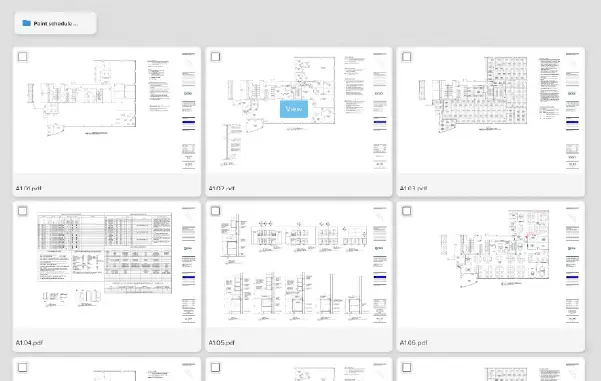
- Collect drawings and confirm latest revision in your cloud plan viewer.
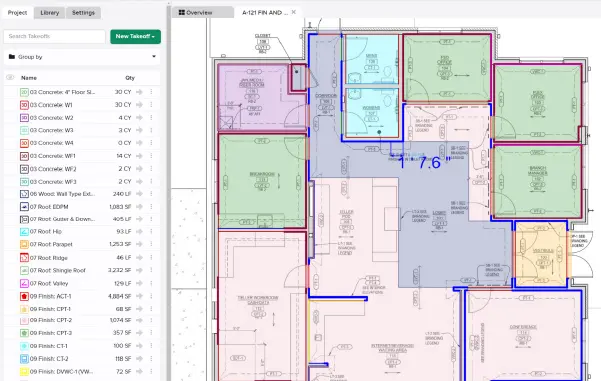
- Measure the correct items (e.g., SF for drywall, LF for trim, CY for concrete).
- Apply formulas: convert measurements to material units and add realistic waste factors.
- Map to assemblies (fasteners, accessories, labor assumptions) to standardize pricing.
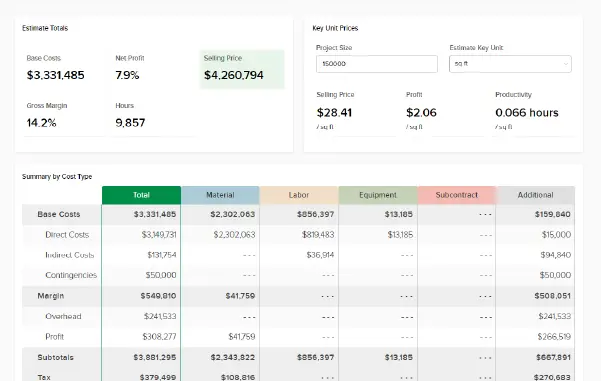
- Roll into an estimate with current cost data; review alternates and scope clarifications.
- Export proposal and attach supporting pages for a professional, consistent bid.
For a typical concrete scenario—say, a [6‑in slab / 12,000 SF drywall scope / 75 LF base]—digital tools make it easy to calculate the exact mix of materials and compare options without rework. With powerful automations, teams reduce manual entry, accelerate construction estimating, and build repeatable assemblies that improve accuracy over time. This guide gives estimators a fast path to accurate bids, and it aligns to buyers who value speed, confidence, and standardized workflows.
Build With Confidence
STACK empowers concrete subcontractors to save time, improve accuracy, and bid more projects. See what STACK can do for your team today!