







The Short Answer: Construction profit margins are tight, and they’re getting tighter. The average net profit margin for most construction firms falls between 2% and 10%, depending on project type and trade. The contractors who consistently land on the higher end are the ones who know their true costs, estimate accurately, and track job performance in real time.
The good news is that most of the factors that eat into your profit margin are within your control. A tighter estimating process, better cost tracking, and smarter overhead management can all move the needle in the right direction. Here’s how to start improving your construction profit margins and protecting your bottom line.
Understanding Construction Profit Margins

Before you can improve your margins, you need to understand how they’re measured. There are two numbers that matter most: gross profit margin and net profit margin. They tell different stories about your construction company’s financial performance, and confusing the two can lead to underpricing your work.
Gross profit margin is what’s left after you subtract your direct costs from total revenue. Direct costs include labor, materials, equipment, and subcontractor expenses. If a project brings in $500,000 in revenue and your direct costs are $400,000, your gross margin is 20%. That number tells you whether your pricing covers the cost of doing the work.
Net profit margin goes further. It accounts for overhead expenses like office rent, insurance, vehicle costs, administrative salaries, and legal fees. Net profit is what your construction business actually keeps. A contractor with a healthy gross margin can still end up with a thin net margin if overhead costs aren’t managed.
Where the Construction Industry Stands
Margins vary across the construction sector. General contractors working on commercial and industrial projects tend to see net margins around 4-5%. Specialty contractors and home builders often perform better, reaching 8-10% in strong years. Gross profit margins for general contractors typically fall between 12-16%, while specialty contractors can go beyond that.
Pro Tip: Track your margins per project, not just annually. Your annual revenue might look healthy, but a few underperforming jobs can drag your average net profit margin down without you realizing it until year-end. Reviewing financial performance at the project level helps you catch problems early and make adjustments on future bids.
What Eats Into Your Margins

Even contractors who price jobs well can watch their margins shrink over the course of a project. The causes are usually predictable, and often times preventable.
Inaccurate Estimates
If your estimate doesn’t reflect actual labor rates, current material costs, or the full scope of work, you’re starting the job behind. Inaccurate estimates are one of the most common reasons construction firms end up with lower profit margins than expected. The gap between what you bid and what the project actually costs comes straight out of your net profit.
Scope Creep and Change Orders
Work that falls outside the original agreement but doesn’t get documented as a formal change order is money out of your pocket. Scope creep happens gradually, and by the time it’s noticeable, the additional work has already eaten into your gross margin.
Rising Material and Labor Costs
Material costs and labor costs continue to climb across the construction industry. If your estimates are based on outdated pricing, even a few percentage points of inflation can erase your margin on a project. Finding skilled workers is also more expensive than it used to be, and overtime costs add up fast when crews are stretched thin.
Untracked Overhead and Indirect Costs
Overhead expenses like insurance, office costs, equipment maintenance, and administrative salaries are easy to underestimate. Many construction companies don’t have a clear picture of their true indirect costs, which means those expenses quietly reduce their net profit margin without ever showing up in a job cost report.
Poor Visibility Into Job Costs
If you’re not tracking actual costs against your budget throughout the construction project, you won’t know there’s a problem until the job is done. Without real-time visibility into job costs, small overruns compound and your bottom line takes the hit.
Pro Tip: Review your last five completed projects and compare estimated costs to actual costs line by line. If the same categories are consistently over budget, that’s where your margin is leaking, and where your estimating process needs to tighten up.
How to Improve Your Construction Profit Margins
Tight margins are a reality in the construction sector, but they’re not fixed. Here are six ways to start moving your numbers in the right direction.
Know Your True Costs
You can’t protect your margin if you don’t know where your money goes. Break out every project’s direct costs, indirect costs, and overhead expenses so you have a clear picture of what each job actually costs to complete. That includes the less obvious line items like equipment wear, fuel, permit fees, and waste disposal. The more granular your cost tracking, the more control you have over your pricing.
Control Scope Creep Through Tight Contracts
Scope creep is one of the fastest ways to erode your gross profit margin. Make sure your construction contracts clearly define the scope of work, and document any additional work as a formal change order with updated pricing before it’s performed. This protects your margin and keeps the client relationship clean.
Bid with Accurate, Detailed Estimates
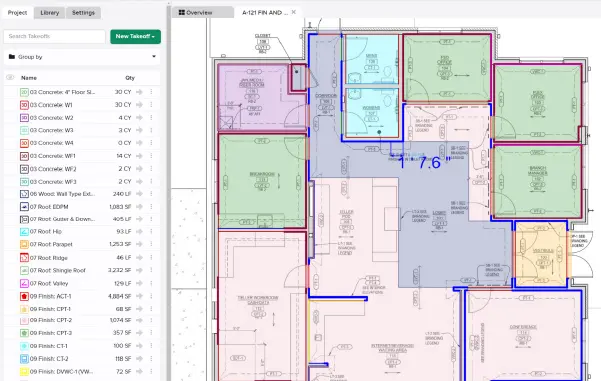
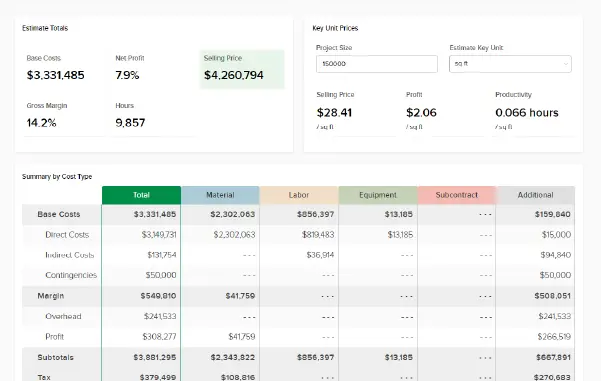
A strong estimate is the foundation of a profitable job. Use current material pricing, realistic labor rates, and historical data from similar projects to build your numbers. Platforms like STACK help your estimating team go from takeoff to estimate to proposal in one place, reducing the data transfer errors that lead to inaccurate estimates and tighter construction profit margins.
Benchmark Against Industry Standards
If you don’t know how your margins compare to others in your trade, you’re operating blind. Use industry benchmarks from organizations like CFMA to see where your financial performance stands relative to other construction firms. If your net margin is consistently below the average for your project type, it’s a signal to look at your estimating, overhead, or field productivity.
Track Job Costs in Real Time
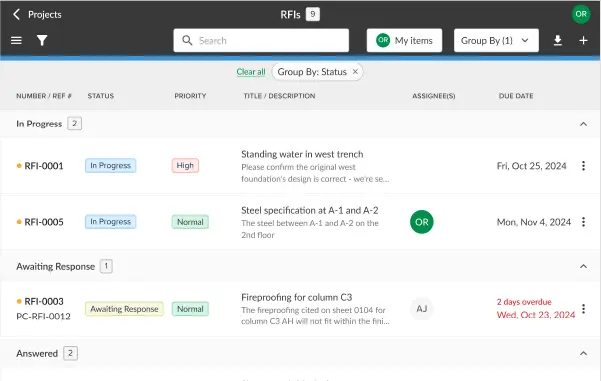
Waiting until a project wraps to review costs is too late. Tracking actual costs against your budget throughout the construction project lets you catch variances early and make corrections before they compound. STACK’s project management tools give your project team real-time visibility into job costs so you’re never guessing where you stand.
Reduce Overhead Without Cutting Quality
Overhead is necessary, but it should scale with your revenue, not outpace it. Review your overhead expenses quarterly and look for areas where you can reduce costs without impacting your crew’s ability to perform. Consolidating software tools, renegotiating insurance, and reducing office space are common starting points. Every dollar you save on overhead goes directly to your net profit margin.
Pro Tip: Set a target net margin for every bid and work backward from there. If you want 8% net profit and your overhead rate is 12%, you need at least a 20% gross margin to make the math work. Pricing with a target in mind keeps your team from leaving money on the table or underbidding a project.
Take Control of Your Construction Profit Margins
Profit margins in the construction industry are thin by nature, but they don’t have to stay that way. The contractors who consistently earn higher profit margins are the ones who know their true costs, estimate with precision, and track financial performance at the project level rather than waiting until year-end.
Small improvements add up. Tightening your estimates, managing scope creep, tracking job costs in real time, and keeping overhead in check can each move your net margin by a few percentage points. Over the course of a year and across multiple projects, that’s a meaningful difference to your bottom line.
STACK gives construction companies the tools to take control of profitability from preconstruction through project completion:
- Accurate Estimating: Digital takeoff and estimating tools help your team build reliable numbers from the start.
- Real-Time Job Cost Tracking: Project management tools keep your team aligned and your costs visible throughout the construction project.
- Data You Can Build On: Historical project data improves your estimates on future projects, creating a cycle of better bids and stronger margins.
Stop leaving profit on the table. Schedule a demo to see how STACK can help your construction business build smarter and more profitably.