





“You finished the takeoff. Why are you rebuilding it in a spreadsheet?”
It’s a question most estimators have never stopped to ask.
Hours are spent carefully measuring plans, identifying assemblies, reviewing quantities, and checking scope. Then, once the takeoff is complete, many teams begin the next phase by manually transferring those quantities into an estimating program, or worse, into a spreadsheet.
Nothing new is being created. The work is simply moving from one system to another. That handoff has become so common that most contractors accept it as part of the estimating process. But it’s also one of the biggest sources of wasted time, preventable errors, and disconnected project data in preconstruction.
We’ve looked at how estimators can reduce takeoff rework and where AI genuinely helps during item identification. This article looks at what happens next, and why keeping takeoff and estimating in one connected platform may be the biggest workflow improvement of all.
What Is Integrated Takeoff & Estimating Software?
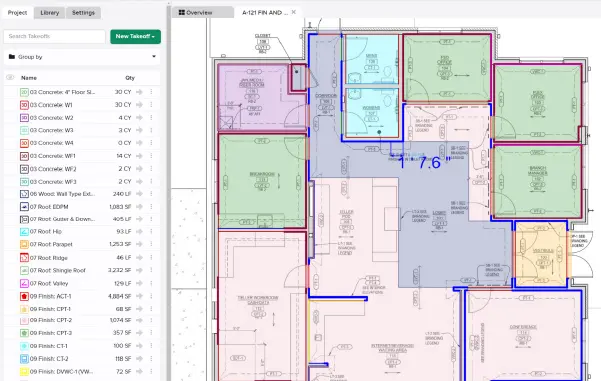
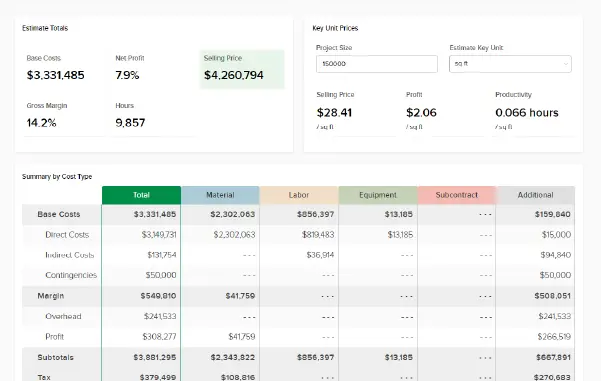
Integrated takeoff and estimating software combines quantity takeoff, assemblies, pricing, and estimate creation within a single platform. Rather than exporting quantities between separate applications, measurements automatically populate the estimate, maintaining a direct connection between every quantity and its source.
Instead of treating takeoff and estimating as separate tasks, integrated software treats them as one continuous workflow.
The Hidden Cost of the Handoff
The actual takeoff isn’t usually the slowest part of estimating. The handoff is.
Once quantities have been measured, many contractors still export data, re-enter quantities, rebuild assemblies, or manually verify spreadsheets before pricing can begin. On a small project, that might only take a few minutes. On a large commercial bid, it can take hours, and those hours produce no additional value.
- They don't improve the estimate.
- They don't uncover new scope.
- They simply move information from one place to another.
Manual transfer also introduces risk and every copied quantity becomes another opportunity for a typo. A transposed digit, a missing line item, an assembly assigned to the wrong scope. These errors are difficult to catch because reviewers naturally assume the transfer was completed correctly. When they aren’t, mistakes can survive all the way to bid submission.
The Real Problem Shows Up When Plans Change
If you’ve estimated more than a handful of projects, you already know one thing: The drawings are going to change.
When takeoff and estimating happen in separate systems, every revision creates duplicate work:
- First, update the takeoff.
- Then export the revised quantities.
- Then update the estimate.
- Then verify every quantity transferred correctly.
- Then review everything again.
It’s not uncommon for estimators to spend nearly as much time managing revisions as they do creating the original estimate. Integrated platforms eliminate much of that duplication. When quantities remain connected to the estimate, revisions flow through automatically. Estimators update the affected measurements once instead of rebuilding the same information across multiple systems. That saves time and dramatically reduces the opportunity for human error.
The Data Gap Most Teams Don't See
Time isn’t the only thing that’s lost when takeoff and estimating happen in separate applications. Context disappears, too.
Think about an estimate six months after bid day. A project manager has a question about a quantity. A senior estimator wants to understand why a particular assembly was selected. Leadership wants to compare historical bids against completed projects.
With disconnected tools, the answers often require opening multiple files, searching through folders, or relying on someone’s memory. With an integrated platform, every quantity can be traced directly back to the original measurement. That level of traceability makes estimate reviews faster, simplifies training, and provides greater confidence during post-bid analysis.
One Source of Truth Makes Better Teams
As estimating teams grow, consistency becomes just as important as speed. Different estimators develop different habits. Assemblies get named differently. Pricing structures evolve. Individuals create their own spreadsheets and shortcuts. Over time, estimating standards begin to drift.
Integrated workflows help bring everyone back to the same process:
- Shared assemblies.
- Shared pricing.
- Shared project data.
- Shared document versions.
Instead of asking which spreadsheet is current or which estimator used the latest revision, everyone works from the same information. That consistency improves productivity and confidence. Reviewers spend less time validating mechanics and more time evaluating strategy. Managers gain clearer visibility into estimating workloads. New estimators learn established processes instead of inheriting disconnected files from previous projects. The result is a stronger estimating team, not just faster individuals.
Curious what an integrated workflow actually looks like?
See how quantities move directly from takeoff into the estimate without manual exports or duplicate data entry.
Book a 20-minute demo: https://www.stackct.com/schedule-a-demo→
Better Workflows Lead to Better Decisions
Saving time is valuable. But it’s not the biggest benefit of integration. The bigger benefit is what estimators do with the time they get back.
Instead of transferring quantities between systems, they can:
- Review scope for completeness.
- Evaluate alternates and value engineering opportunities.
- Compare subcontractor proposals.
- Validate production assumptions.
- Pressure-test pricing before submission.
Those activities improve the quality of the bid. Moving numbers between software does not. Technology should remove repetitive administrative work so estimators can focus on the decisions that actually win projects. That’s where experience creates competitive advantage.
Connected Data Builds Long-Term Value
Every completed estimate teaches your business something:
- Which assemblies perform well.
- How production rates vary by project type.
- What inclusions consistently affect profitability.
- Which historical projects resemble the next opportunity.
Unfortunately, disconnected systems rarely preserve that information in a usable way. When takeoff and estimating live together, every project becomes part of a growing knowledge base. Historical quantities remain connected to pricing, assemblies become standardized, and past projects become searchable. That continuity creates immediate operational benefits, but it also positions contractors to take better advantage of AI in the future.
AI performs best when it learns from structured, connected project data. An integrated estimating platform creates that foundation naturally with every completed project. It’s not about preparing for some distant future, It’s about making today’s projects more valuable tomorrow.
Why Many Contractors Still Use Two Tools
If integrated workflows are so beneficial, why are separate takeoff and estimating systems still common? Because that’s how the industry evolved.
For decades, takeoffs were completed on paper. Estimating happened in spreadsheets. As software emerged, digital takeoff tools and estimating applications developed independently and using two systems was the only option. Today, many contractors remain on those workflows because switching software feels disruptive. Changing estimating processes requires planning, training, and buy-in from the entire team. But it’s also worth asking another question: What’s the cost of staying where you are?
If every project requires manual quantity transfers, duplicate revisions, disconnected project records, and hours of administrative work, those costs accumulate every week. The transition may require effort. The status quo requires it every single day.
One Workflow From Start to Finish
Integrated platforms connect software and people. Estimators can complete the takeoff knowing quantities flow directly into the estimate. Reviewers can trace every quantity back to its source. Managers gain visibility into estimating activity without chasing spreadsheets. Leadership builds a growing database of historical project knowledge instead of disconnected files.
At STACK, that’s exactly how Takeoff & Estimate was designed. Rather than connecting separate applications through exports or integrations, takeoff and estimating happen inside one cloud-based workflow. Quantities remain connected from the first measurement through the final estimate, reducing duplicate work while improving visibility across the entire preconstruction process.
The goal is to eliminate work that never needed to exist in the first place.
See the Integrated Workflow in Action
If you’ve followed this series, you’ve seen where estimating teams lose time:
- Rework caused by calibration and revisions.
- Manual item identification.
- Duplicate work between takeoff and estimating.
An integrated workflow addresses all three.
If you’d like to see how it works in practice, schedule a personalized demo with a STACK product specialist.
See STACK Takeoff & Estimate in action: https://www.stackct.com/schedule-a-demo→
FAQ
Integrated takeoff and estimating software combines digital takeoff and estimate creation within one platform. Quantities flow directly into the estimate without requiring manual exports, spreadsheets, or duplicate data entry.
Many contractors adopted separate systems because integrated platforms weren’t widely available when their workflows were established. While familiar, disconnected systems often require additional manual work, especially during revisions.
By eliminating manual data transfers, integrated software reduces transcription mistakes, missing quantities, and inconsistencies between takeoffs and estimates. Every quantity remains linked to its original measurement for easier review.
Yes. Teams work from shared project information, standardized assemblies, and current drawing versions. Managers can review estimates more efficiently, and new estimators can follow consistent workflows across every project.
AI performs best when it has access to structured historical data. Integrated platforms preserve the relationship between quantities, assemblies, pricing, and project outcomes, creating a stronger foundation for future AI-assisted estimating and analysis.